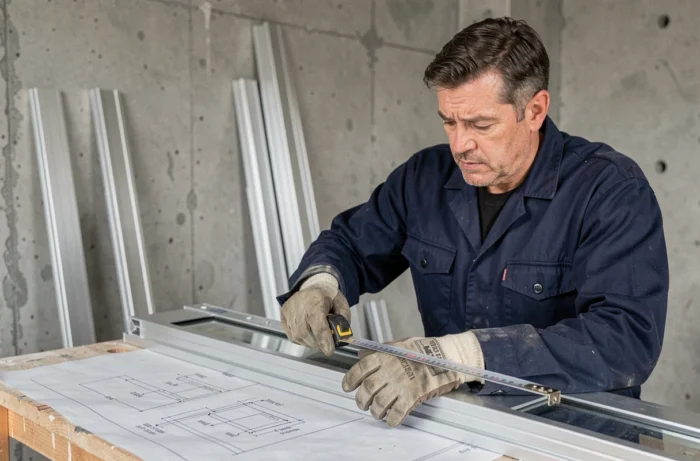
On a renovation site, the moment when the old window is removed and the actual condition of the frame is revealed determines the rest of the installation. With aluminum, this step is even more critical: the material does not forgive a lack of squareness or poorly anticipated thermal expansion. Understanding the specific constraints of aluminum before touching the frame avoids costly corrections and ensures long-lasting waterproofing.
Thermal expansion of aluminum: the parameter that the frame must absorb
Aluminum expands significantly more than PVC or wood when exposed to heat. On a large opening, this phenomenon can generate several millimeters of variation between winter and summer. If the peripheral gap between the frame and the masonry is too tight, the profile exerts pressure on its fixings and deforms the sealing joint.
In practice, a calibrated installation gap is planned based on the length of the profile and the local thermal amplitude. Underestimating this gap remains the most common mistake among occasional installers. A quality aluminum profile includes a thermal break strip, but this does not compensate for a dimensional defect in the frame.
To properly understand how to install aluminum correctly, one always starts by checking the actual dimensions of the opening, never the dimensions on the plan. A discrepancy of a few millimeters between the measurement and reality is enough to compromise insulation.
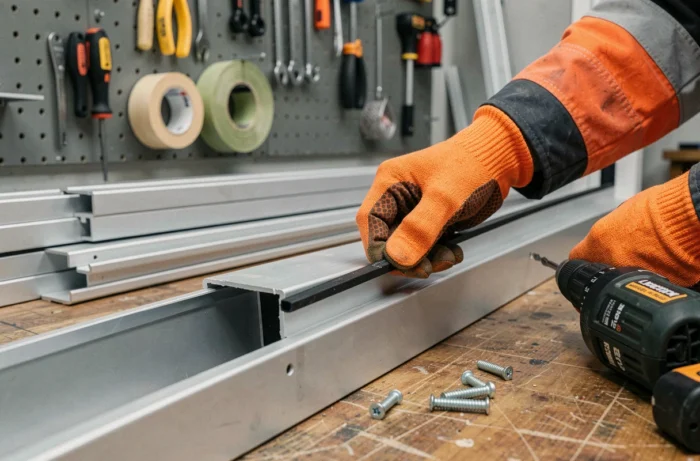
Partial renovation or total removal: criteria for field choice
Partial renovation involves keeping the old frame and installing the new aluminum joinery over it. It’s quicker, less messy, and there’s no need to touch the plaster or the interior lining. However, keeping a degraded frame compromises waterproofing in the medium term.
The condition of the frame is assessed on three points:
- The solidity of the anchoring in the masonry: if the frame moves when pushed laterally, total removal is necessary.
- The absence of signs of infiltration or rot (wood frame): any soft or stained area indicates a structural problem.
- Dimensional compatibility: the new aluminum frame slightly reduces the glazed area. On a small window, this loss of light can become problematic.
Total removal frees the entire opening in the wall. You regain the maximum glazed area and control the waterproofing from the raw masonry. The project is more extensive (plaster restoration, possible lining touch-up), but the result is more durable.
Waterproofing and fixing an aluminum window: the gestures that change everything
A well-fixed aluminum window that is poorly sealed allows air and water to pass through after a few seasons. Waterproofing is done in three distinct layers, from the inside to the outside.
Interior barrier against water vapor
On the interior side, a pre-compressed foam seal or an air-tightness membrane is installed. This seal prevents the water vapor from the home from migrating into the frame and condensing in the insulation. The interior seal must be more airtight than the exterior seal, otherwise, moisture gets trapped in the connection.
Peripheral sealing
The space between the aluminum frame and the masonry is filled with closed-cell expanding polyurethane foam. The foam is applied in regular beads, without overfilling: overly compressed foam loses its insulating power and can deform the frame.
Exterior protection against rain
On the exterior side, a silicone sealant or a hydrophobic pre-compressed seal ensures water drainage. On an exposed wall, it is checked that the drip edge (the small slope at the bottom of the opening) is present and oriented outward. Without a drip edge, water stagnates at the bottom of the frame and eventually seeps in.
Aluminum windows and financial aid: what the installation changes
In 2026, MaPrimeRénov’ for window replacement is reserved for homes over fifteen years old and only concerns the replacement of single glazing with a complete window including insulating glazing and frame. The aid is calculated per opening, with a flat rate depending on the household’s income level.
Replacing existing double glazing with aluminum does not grant any aid, even if the new window is more efficient. Similarly, installing it oneself without hiring a RGE professional excludes any subsidy. Feedback varies on this point depending on configurations, but the rule remains strict: no RGE certification for the installer, no bonus.
The marked decrease in MaPrimeRénov’ requests observed recently, linked to the reduction of aid ceilings and the priority given to extensive renovations, reduces the economic interest of isolated window replacement projects. Before starting the installation, one should check the actual eligibility of the project with Anah to avoid relying on funding that will not come.
Tools and checks before installing an aluminum window
Aluminum is lightweight but rigid: a fall or corner impact on the profile leaves a permanent mark. The frame is handled by two people, always flat, never resting on a single corner.
- Long spirit level (at least one meter) to check the plumb and horizontal alignment of the frame before final fixing.
- Plastic shims of various thicknesses to adjust positioning without forcing the frame.
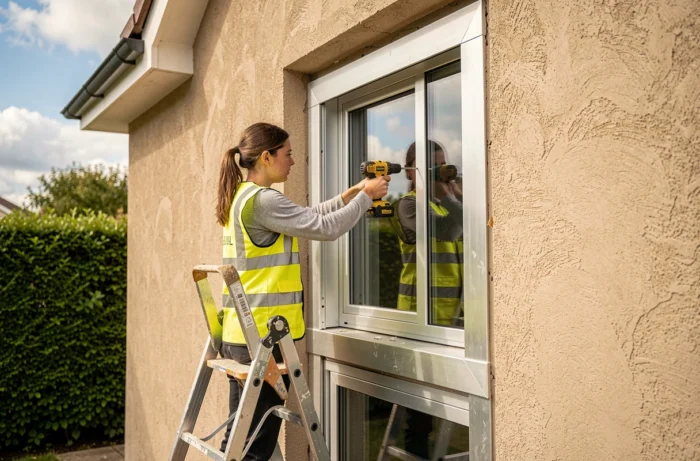
- Drill-driver with bits suitable for the substrate (concrete, cinder block, wood): the fixing screws pass through the aluminum frame and anchor into the masonry.
- Professional PU foam gun: consumer-grade spray foam lacks precision and uniformity for durable sealing.
Each fixing screw must pass through the frame in a reinforced area of the profile, never in the thermal break chamber. Drilling in the wrong place creates a punctual thermal bridge and weakens the structure of the frame.
Once the window is fixed and shimmed, the opening and closing of each sash are checked before applying the sealing joints. Correcting a squareness defect after applying foam requires starting over from the beginning.