Women’s fashion operates in seasonal cycles, but the mechanisms that dictate trends have changed. Collections are no longer the sole driving force: second-hand, European regulations on eco-design, and shopping habits are reshuffling the deck. Understanding these levers allows for the creation of cohesive looks, season after season, without accumulating disposable pieces.
Circular fashion and second-hand: the invisible filter of women’s trends
Competitors talk about colors and silhouettes. They overlook a structural fact: second-hand accounts for about 40% of the French fashion market, with an estimated annual growth of around 20%, according to an analysis by Shaare Agency for 2026. New clothing online is progressing much more slowly.
This gap changes the way trends circulate. A standout piece from a spring-summer collection (a leather trench coat, a structured-shoulder dress) no longer disappears at the end of the season. It reappears on resale platforms a few months later, at a lower price, and continues to feed autumn looks.
For those looking to follow women’s fashion trends without renewing their wardrobe every quarter, consignment and resale platforms are becoming a fully-fledged supply channel. Hunting for a trendy piece second-hand means adopting the season’s style with a delay of a few weeks, not several years.
The inspirations and advice found on the fashion section of Fimina Mag integrate this logic by offering ideas for looks that can be adapted from one season to the next.
Building a seasonal look around three key pieces
Accumulating trendy pieces results in a saturated wardrobe and inconsistent outfits. A more effective approach is to identify, each season, three key pieces that structure the majority of looks.
The principle of the key piece
A key piece is a garment that is distinctive enough to provide a stylistic direction, yet versatile enough to combine with the rest of the wardrobe. It is neither basic nor eccentric.
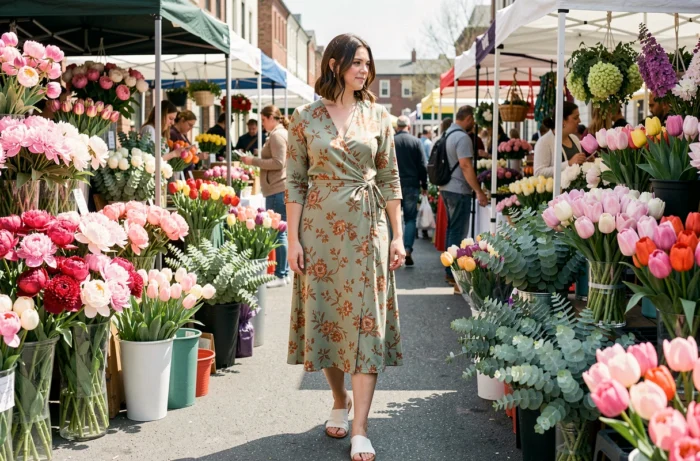
- In spring-summer, a midi dress in a seasonal color (pastel tones or pink regularly return) serves as a base for both daytime and evening looks, depending on the accessories.
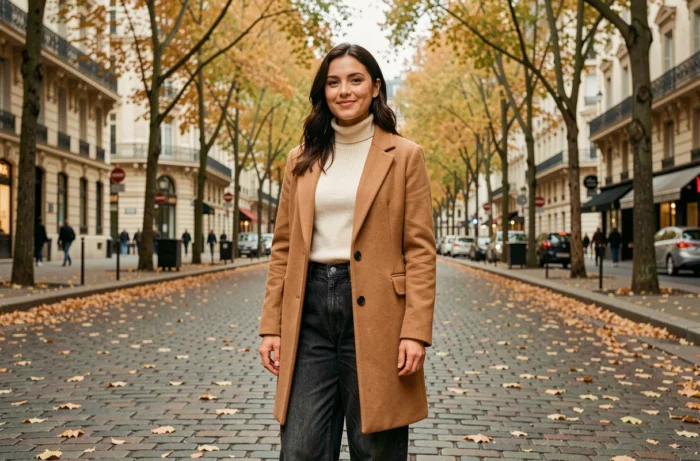
- In autumn-winter, a coat or jacket in textured materials (boiled wool, soft leather) anchors the silhouette and absorbs temperature variations without multiplying layers.
- All year round, contemporary-cut trousers (high-waisted, wide or straight leg according to the dominant trend) replace the default jeans and immediately elevate an outfit.
The rest of the look consists of already owned pieces. A solid top, a ribbed sweater, flat shoes or moderately heeled shoes. The key piece does the stylistic work, while the basics ensure coherence.
Adapting the choice to one’s morphology rather than to the runways
Runway trends filter down to ready-to-wear with adjustments. A micro-skirt seen on the runway does not suit all styles or situations. Translating a trend into clothing choices means adapting it to one’s silhouette, not reproducing it exactly.
The midi length, for example, works on most body types when the cut is fitted at the waist and fluid at the hips. Leather, a recurring trend in recent seasons, comes in a short jacket for smaller silhouettes and a long trench for taller ones.
Colors and materials: reading the signals of each season
Colors operate in cycles. Pink, in all its shades, regularly returns in spring-summer. Neutral tones (beige, ecru, off-white) dominate summer collections, while deep shades (burgundy, forest green, navy blue) settle in autumn.
Identifying the dominant color of a season allows for targeting one or two strategic purchases rather than chasing every micro-trend. Just one garment in the season’s key shade, worn with neutrals, is enough to refresh a look.
The role of materials in the perception of style
The material of a garment influences style as much as its cut or color. The same model of trousers in linen and corduroy creates two radically different silhouettes.
- Spring-summer: linen, lightweight cotton, and washed silk bring fluidity. These materials support pastel colors without appearing too dressed up.
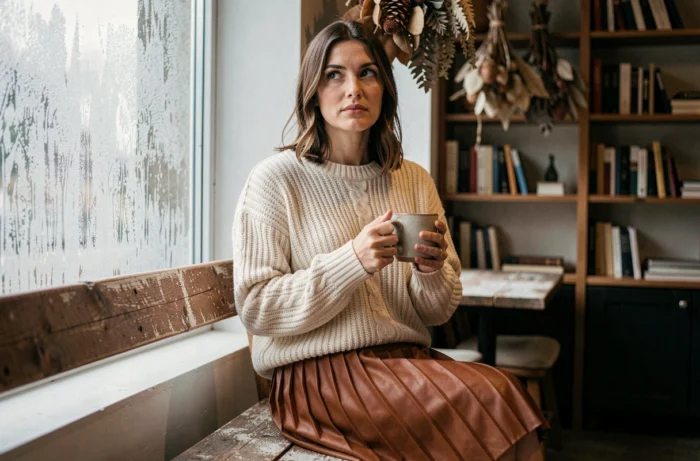
- Autumn-winter: thick knit, leather, and blended wool add volume and structure. Dark colors gain depth on these textures.
- Mid-season: mixed materials (cotton-wool, viscose-linen) allow for wearing mid-season pieces longer, reducing the need to buy specific clothing for just a few weeks.
Choosing materials suited to the season also avoids comfort errors. A thick polyester blazer worn in June is hot and wrinkles, regardless of the trend it is supposed to embody.
European textile regulation: what changes for the wardrobe
The European regulation on the eco-design of sustainable products (ESPR) gradually imposes new requirements on textile brands. A digital product passport will ultimately accompany every garment sold in the European Union, with information on composition, durability, and recyclability.
For buyers, this means future access to reliable data on the actual quality of a piece before purchase. Brands will also need to limit the destruction of unsold items, pushing more stock towards outlets and second-hand.
This evolution reinforces an underlying trend: investing in pieces whose material quality is verifiable rather than multiplying low-cost purchases. Seasonal style will not be any less varied, but the way to compose it will change sustainably.
Women’s fashion trends are no longer just a color palette dictated by runways. They play out in the choice of materials, the circulation of pieces between seasons, and the ability to read regulatory signals that reshape the available offer.