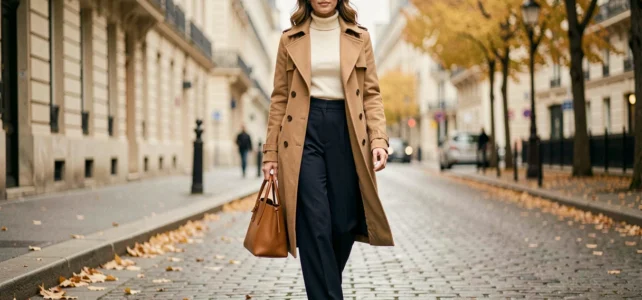
Each season reshapes the contours of the women’s wardrobe, but the women’s fashion trends of 2026 go beyond a simple change of colors. With environmental regulations shaking up brands, the rise of second-hand fashion, and new ways of consuming (rentals, digital tools), creating a unique style today requires looking beyond the shop windows.
Textile environmental display: what changes for choosing your clothes
Have you noticed “eco-friendly” or “low carbon footprint” labels on your clothing? These claims will be much more strictly regulated starting October 1, 2026.
Decree No. 2025-957 of September 6, 2025, established a environmental score calculated via the Ecobalyse platform. This score is voluntary, but two restrictions will be lifted starting October 2026: a third party will be able to publish a brand’s environmental score without its consent, and any company that communicates about an environmental aspect of its products will also have to display the official environmental cost.
In practical terms, a brand that states “sustainable fabric” on its product sheet will be required to calculate and publicly disclose its score. This means that consumers will have access to comparable data from one brand to another, similar to the Nutri-Score for food. To refine your choices of looks and outfits, resources like the Chroniques Blondes fashion site already allow you to track these developments by linking them to current trends.
This framework pushes brands to rethink the composition of their collections. Recycled materials, low-impact dyes, and traceable fibers are gaining ground, not as a fashion effect, but as a legal obligation.
Second-hand and clothing rental: two levers for a distinctive women’s style
Second-hand is no longer a plan B. Women’s clothing accounts for the largest share of second-hand spending, around half of purchases according to market data. This figure reflects a profound shift in how to build a look.
Why second-hand changes the game in women’s fashion
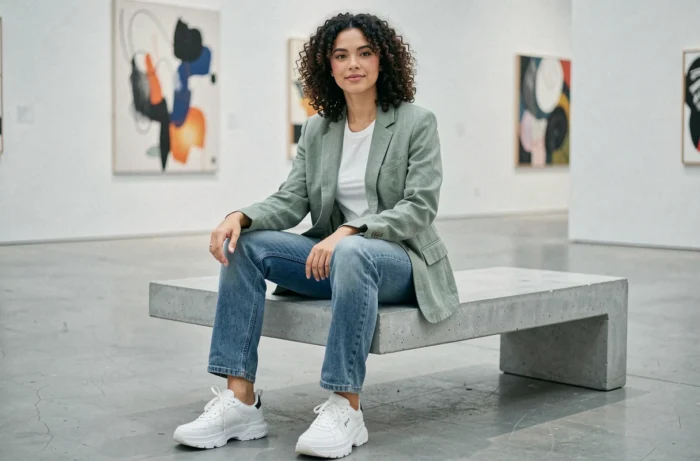
Buying a vintage dress or a second-hand blazer allows access to pieces that are no longer available in mainstream retail. The result: a wardrobe that no one else can replicate exactly.
The advantage goes beyond originality. The lower price of a second-hand piece frees up budget to invest in a quality accessory (leather bag, well-tailored shoes) that structures the entire outfit.
Clothing rental: diversifying without accumulating
Clothing rental (event dresses, professional outfits, designer pieces) has shifted from a niche practice to a common option. The principle is simple: rent a dress for a ceremony or a complete look for a week of work, then return it.
This model is particularly suitable for pieces that are only worn once or twice a year. Rather than buying an evening dress that will sit in the closet, renting allows you to vary your looks without overloading your wardrobe.
- For ceremonies (weddings, galas), renting provides access to designer dresses at a fraction of the purchase price.
- For the office, some platforms offer rotations of professional outfits each month, renewing your style effortlessly.
- For travel, renting clothes suited to the destination’s climate avoids overpacking and buying pieces that won’t be worn again.
Building a coherent women’s look: the pivot piece method
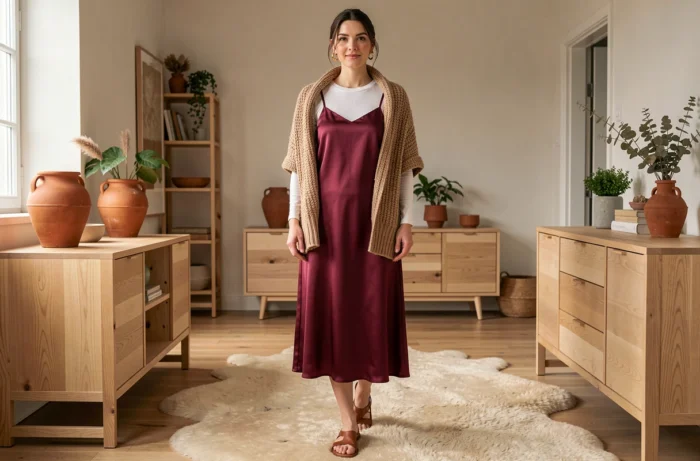
Following women’s fashion trends does not mean renewing everything each season. The idea that works best in practice relies on what can be called pivot pieces: garments that are neutral enough to pair with anything, but with a detail (cut, material, color) that gives them character.
A concrete example: a slightly flared tailored pant in textured fabric. Worn with a white t-shirt and sneakers, it gives a casual look. Paired with a satin blouse and heels, it transitions to evening wear. The piece remains the same, but the style changes completely.
How to identify a good pivot piece
Three criteria help spot these garments at the time of purchase or rental:
- The cut should work with at least three tops or three bottoms already in your wardrobe. If you only see one possible combination, the piece is too specific.
- The color should remain within a palette compatible with your basics. Neutral tones (beige, navy, gray, off-white) or deep colors (burgundy, pine green) offer more combinations than very bold prints.
- The material should last several seasons without deforming. A fabric that pills after three washes is not an investment; it’s an expense.
Focusing on five to seven pivot pieces covers most daily situations, from the office to the weekend to outings. The rest of the wardrobe (accessories, trendy pieces of the season) complements without weighing it down.
Colors and silhouettes of the season: what is actually worn
The spring-summer 2026 collections highlight pink in all its shades and pastel tones. These hues work well in a total look or as a unique touch on an accessory or top.
In terms of silhouettes, structured cuts at the shoulders are making a comeback, paired with defined waists. The contrast between a fitted top and a fluid bottom (midi skirt, wide pants) creates a visual balance that elongates the silhouette without restricting movement.
For the upcoming autumn-winter outfits in stores, lightweight layering takes over: a sleeveless cardigan over a shirt, a thin trench over a dress. The goal is to create depth in the look without multiplying layers.
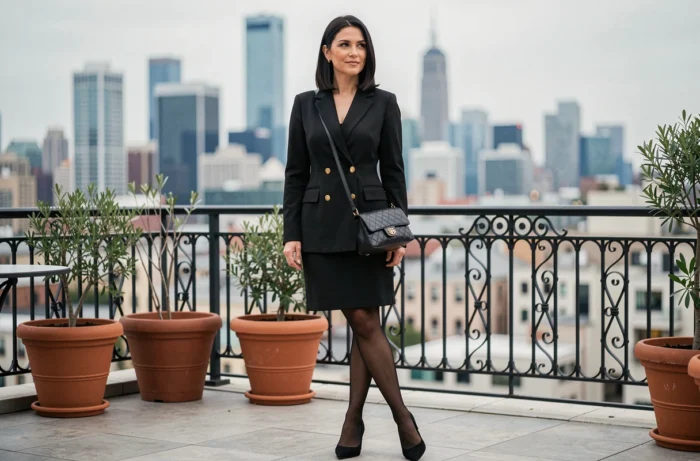
The women’s fashion trends of 2026 boil down to a balancing act between quality, traceability, and creativity. The mandatory environmental score will make comparisons between brands more transparent. Second-hand and rental options provide concrete alternatives to vary one’s style. The real lever remains to choose fewer pieces, but better suited to one’s way of living.