A customer places an order on a Tuesday evening at 10 PM. The next morning, the package is shipped. The day after that, it is delivered. Between these two moments, about ten micro-logistical decisions have been made, often without the merchant being fully aware. It is in this chain of decisions that the optimization of e-commerce shipments takes place, and this is where a fast delivery service makes a real difference.
Cut-off time and order preparation: the lever that carriers do not highlight
We often talk about delivery times from the carrier’s side, but rarely about the cut-off, the deadline after which an order is pushed to the next day. In most logistics solutions, this cut-off is in the early afternoon. Any order placed after this time automatically loses 24 hours.
Optimization starts here: pushing back the cut-off by one to two hours reduces the perceived delay for the customer without speeding up the transport itself. Some providers specializing in fast delivery offer late pickups or extended collection slots, allowing same-day shipping for orders placed late in the day.
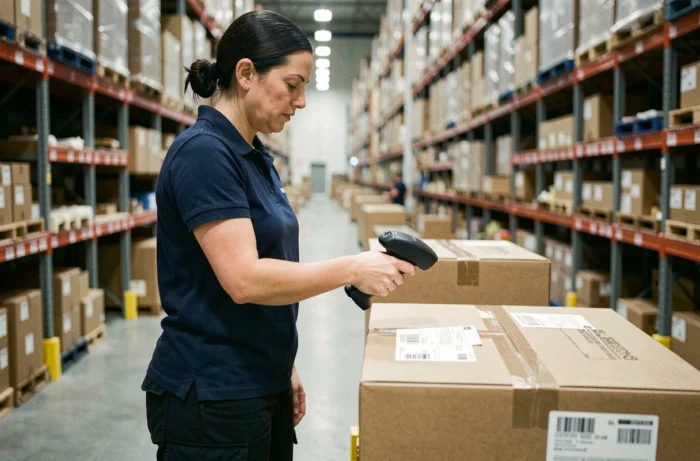
In practice, we gain time not by driving faster, but by reducing the downtime between cart validation and package departure. On the warehouse side, this requires a smooth order preparation: optimized picking, standardized packaging, automated labeling. A service like the one described on https://www.speeder.fr/ fits into this logic of rapid shipping with tight collection deadlines.
ZFE constraints and fast delivery in urban areas
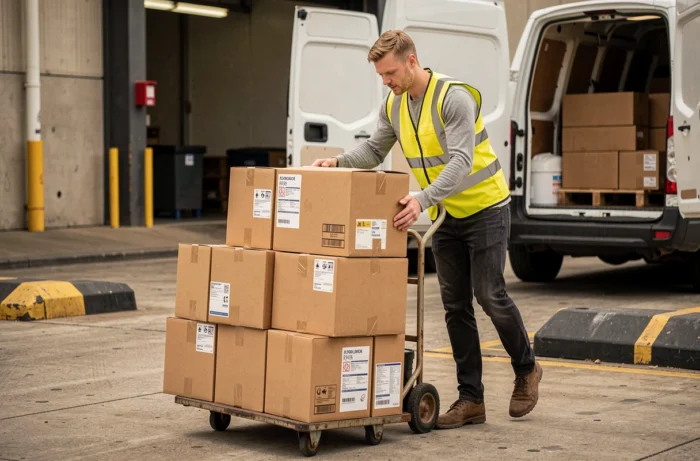
Low Emission Zones (ZFE), now in effect in major French urban areas including Paris and Île-de-France, profoundly change the conditions of the last mile. An e-commerce merchant promising express delivery in the city center can no longer ignore the compatibility of their carrier’s fleet with these restrictions.
The last mile accounts for about 30% of greenhouse gas emissions related to package delivery in cities, according to ADEME. This same step can account for between one-fifth and half of the total cost of a delivery.
For an online merchant, the trade-off is threefold:
- Ensure that the chosen carrier has vehicles compliant with current and upcoming ZFE regulations, or risk having deliveries blocked or delayed.
- Anticipate any additional costs related to using electric fleets or cargo bikes, and decide whether to absorb this cost or pass it on to shipping fees.
- Integrate urban relay points as a fallback solution when home delivery in ZFE areas becomes too costly or too slow.
Optimizing shipments in 2026 involves balancing speed and regulatory compliance. Selecting a provider solely based on their per-package rate, without considering their ZFE coverage, exposes one to unachievable delivery promises.
Multi-carrier strategy: why a single partner is no longer enough
We regularly observe e-commerce merchants entrusting all their shipments to a single carrier. The logic is understandable: a single contract, one point of contact, volume-negotiated rates. In practice, this approach weakens the entire chain as soon as an incident occurs (strike, seasonal overload, partner’s IT failure).
Distributing shipments among two or three complementary carriers allows routing each package to the most suitable service based on destination, weight, and urgency. A light package to a large city can go via an urban express service. A bulky package to a rural area will use a national network with relay points.
How to arbitrate without complicating management
The perceived difficulty of multi-carrier management lies in the proliferation of technical integrations. Today, shipment management solutions (like OMS or lightweight TMS) allow connecting multiple carriers from a single interface, with automatic allocation rules.
Feedback varies on this point: some merchants see a net gain in reliability as soon as the second carrier is integrated, while others believe the benefit is only measurable with the third. What is agreed upon is that dependency on a single provider remains the main factor for service disruption during peak activity.

Post-purchase experience and package tracking: what keeps the customer engaged
Delivery tracking is no longer a bonus. Consumers check the status of their order multiple times between shipping and receipt. A lack of tracking (status frozen for 48 hours, missing notifications) generates customer service tickets and erodes trust.
Three concrete elements transform the post-purchase experience:
- Proactive notifications at each stage (pickup, in transit, out for delivery), sent via email or SMS without the customer needing to log into a third-party portal.
- A tracking page branded in the store’s colors, which avoids redirecting the customer to the carrier’s site and maintains brand consistency.
- A direct communication channel in case of issues (delay, incorrect address), ideally integrated into the same tracking tool to avoid back-and-forth between platforms.
Well-designed package tracking reduces customer service requests and increases repurchase rates. It is a loyalty lever at least as powerful as the speed of delivery itself.
Return management: the hidden side of fast shipping
A fast delivery service that does not provide a smooth return process creates a frustrating asymmetry for the customer. Shipping quickly but taking ten days to process a return negatively impacts the overall perception of the service. Prepaid return labels, reverse tracking, and refunds triggered as soon as the return package is picked up are standards that online shoppers now expect.
The speed of shipping is not limited to the outbound journey. It entails a promise across the entire order cycle, including returns. A merchant who masters this complete cycle, from cut-off to return management, transforms their logistics into a sustainable competitive advantage.