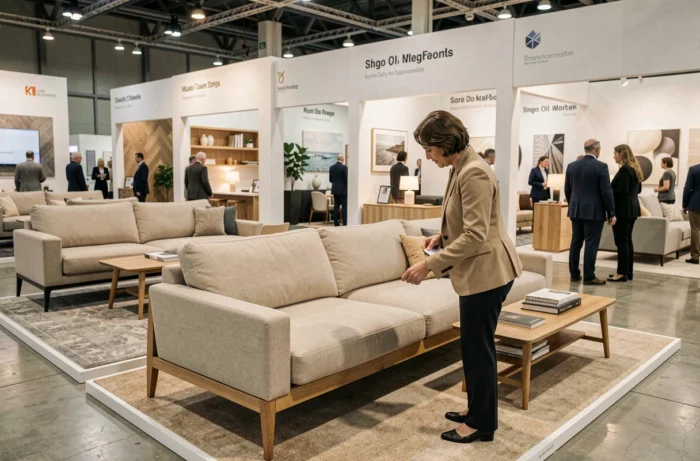
Home shows are evolving quickly. Where a visitor primarily found stands from carpenters and kitchen designers, they now encounter free legal consultations, segmented thematic paths, and outdoor villages dedicated to landscaping. The Salon Tendances Habitat illustrates this transformation: its organization by categories is no longer limited to the classic building sectors, and the way these categories are conceived speaks volumes about the sector’s priorities in 2026.
Legal and Regulatory Advice: The Category That Home Shows Were Missing
The most significant addition in recent home shows is the integration of legal services directly at the event. At the Salon Tendance Habitat in Montluel, a justice commissioner offering free consultations is part of the official setup. This is not a commercial stand: it is a regulatory support service integrated into the visitor’s journey.
This presence addresses a concrete need. Renovation or construction projects involve contracts, potential disputes with artisans, and questions about co-ownership. Until recently, these topics remained outside the scope of home shows. Visitors had to consult a legal professional separately, often after signing a quote.
By integrating a legal section, the organizers acknowledge that the home project does not stop at materials and installation. A visitor who can verify the solidity of a contract or ask a question about a building permit in the same place they compare insulation materials saves considerable time. Feedback from the field varies on the actual attendance at these advisory stands, but their multiplication in several recent editions suggests that demand exists.
The full range of categories and themes covered by the show can be found on the Salon Tendances Habitat site map, allowing visitors to anticipate their visit before traveling.
Thematic Paths in Home Shows: House, Garden, Leisure, and Beyond
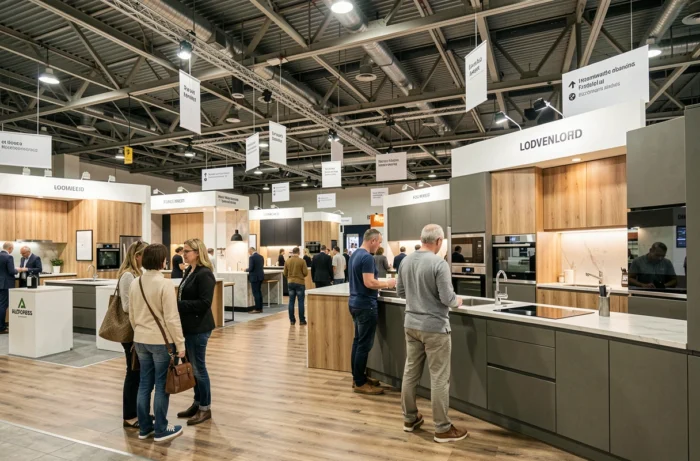
Structuring into thematic universes has become a standard organizational practice for mid-sized home shows. The Salon de l’Habitat in Cagnes-sur-Mer, for example, explicitly segments its space into three poles: House (renovation, layout, energy solutions), Garden (landscaping, furniture, tools), and Leisure (high-tech, travel, creative hobbies).
This segmentation is not just a logistical choice. It guides the visitor’s journey and alters the nature of exchanges at the stands. An exhibitor placed in the “Garden” universe knows that the people passing by their stand have an outdoor project. The qualification is mechanically better than in a show where all exhibitors are mixed without spatial logic.
Expanding the Notion of Home to the Outdoors
Some shows go further than internal segmentation by creating spaces dedicated to outdoor arrangements. This physical extension of the show reflects an expansion of the notion of home: the garden, terrace, and pergola are no longer mere appendages to the project but full-fledged budget items that visitors come to compare on-site.
For construction professionals, this evolution involves a strategic choice when booking a location. Positioning in the right thematic universe determines the quality of the contacts generated. A manufacturer of outdoor joinery will understandably hesitate between the “House” pole (energy renovation) and the “Garden” pole (outdoor layout).
Salon Tendances Habitat and Innovation: What the Category Really Covers
The word “innovation” appears in the communication of nearly all home shows. The question is what it concretely covers at the stands.
At the Salon Habitat et Bois d’Épinal, the announced innovations concern constructive solutions and materials. The show combines traditional building exhibitors with wood construction players, creating a technical section absent from generalist shows.
In contrast, in more compact shows like the one in Montluel, innovation manifests differently: it is the addition of services (legal, energy, financial) that constitutes the novelty, not the displayed products. The available data do not allow for a conclusion that one format is more effective than the other for visitors, but the trend is clear: the sections are expanding well beyond structural work and decoration.
- Energy solutions and thermal renovation, present in the majority of home shows in 2026 as an independent category
- Legal and regulatory advice, with legal professionals integrated into the visitor’s journey
- Outdoor and landscaping arrangements, sometimes separated in a dedicated village outside the main hall
- Leisure and high-tech, integrated into generalist shows that combine home and quality of life
Regional Home Shows: Formats and Categories That Vary by Territory
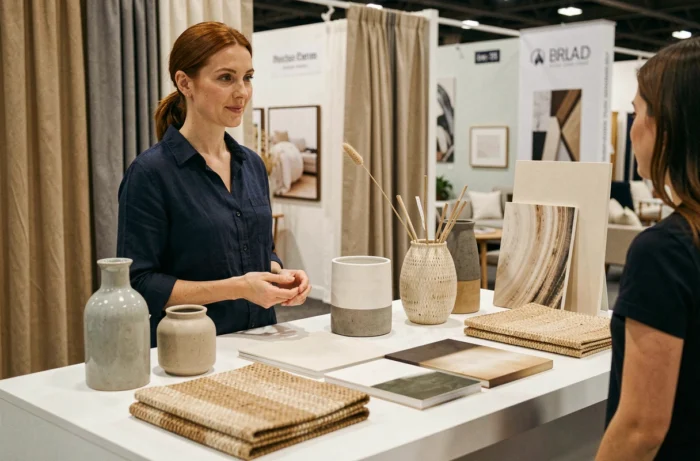
Not all home shows are alike, and this is precisely what makes their organization interesting to analyze. The differences in positioning between regional editions directly influence the categories offered and the types of projects highlighted.
These differences are not trivial for a visitor or an exhibitor. A regional show with a hundred local companies will not offer the same categories as a national event. The “new construction” category may be dominant in a region where land is available, and almost absent in an urban show focused on renovation.
For industry professionals, the choice of show depends as much on the profile of visitors as on the structuring of categories. A craftsman specialized in external thermal insulation has an interest in checking whether the show distinguishes a “energy renovation” category or drowns this subject in an undifferentiated “structural work” set.
The multiplication of local editions, from Épinal to Cagnes-sur-Mer through Aurillac (which combines home and automobile), shows that each territory adapts the categories to its economic reality and its audience. What remains constant is the gradual expansion of the scope: a home show in 2026 covers work, energy, law, garden, and sometimes leisure. The boundary between specialized shows and quality of life shows is blurring, and the categories reflect this evolution.