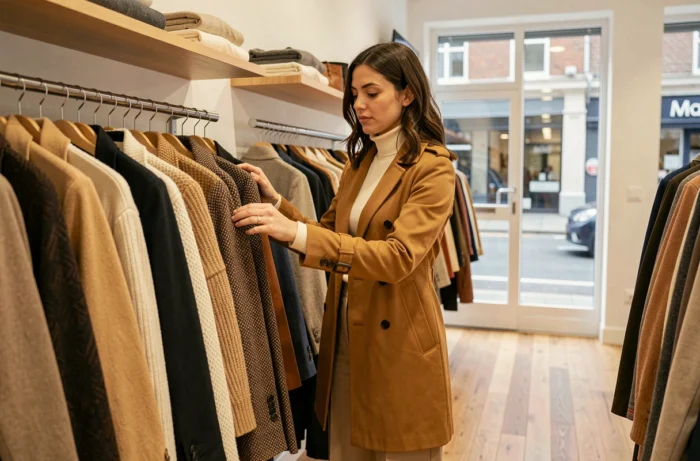
Renewing your wardrobe this season is no longer just about following the runway shows. Since September 1, 2026, France has implemented a financial penalty on clothing from ultra-fast fashion, which significantly alters the prices on the shelves and purchasing decisions. The shopping trends of the season are thus viewed through a dual lens: what is appealing and what actually costs, including the penalty.
Ultra-fast fashion penalty: what changes for clothing prices
The French measure targets players who sell a very wide range of new products while offering little incentive for repair. The decree published by the Ministry of Ecological Transition on August 28, 2026, specifies that the amount of the penalty depends on the breadth of the offer and the repairability of the items.
Shoes, clothing, and certain home textiles are affected, but second-hand items are exempt from the measure.
This regulatory framework provides a direct price advantage to second-hand clothing and brands that incorporate a repair service. For a buyer who is keeping an eye on their budget, this means that two dresses at the same catalog price no longer have the same final price if one comes from a brand subject to the penalty. Several useful references for comparing offers according to these new criteria are available on the Tendancez-vous website, which aggregates trends by product category.

Repairability of clothing: a selection criterion as important as fit
The French regulation assesses the ratio between the average repair cost of an item and its selling price. It also considers the existence of a repair service offered by the brand. This mechanism encourages brands to rethink the design of their pieces.
Repairability is becoming a selection criterion as crucial as material or fit. A sweater with accessible seams and standard thread will cost less to mend than a thermofused sweater. Brands that document their care instructions and offer a tailoring workshop gain a competitive advantage on the final price.
For consumers, this translates into some concrete reflexes to adopt before purchasing:
- Check if the brand offers a repair or alteration service, even if paid, as this indicates a design suited for durability
- Favor clothing with visible and accessible seams, which facilitates repairs by an independent tailor
- Compare the displayed price to the actual cost of use over two or three seasons, factoring in any penalties and the cost of a simple repair
Items gaining relevance this season
Structured jackets made of thick fabric, knitted sweaters (rather than thermofused), and dresses with removable linings are among the pieces designed for easier repair. These garments can last through several seasons without losing their shape, which reduces the cost per use.
Adjustable waist trousers and shirts with replaceable buttons follow the same logic. These are not new aesthetic trends, but their economic relevance increases in the context of the penalty.
Second-hand and seasonal wardrobe: the concrete regulatory advantage
Second-hand products are not included in the legal category of “ultra-fast fashion” and therefore do not incur the penalty. This exclusion, confirmed by the analysis from the De Gaulle Fleurance firm published on September 7, 2026, gives second-hand items a structural price advantage.
A second-hand garment is exempt from the penalty regardless of its original brand. A dress initially sold on a fast fashion platform can be resold second-hand without any regulatory surcharge. The resale market thus captures part of the demand that would have been directed toward low-priced new items.

To renew a wardrobe this season, the most cost-effective strategy is to combine a few new pieces chosen for their repairability with second-hand finds. Online and physical thrift stores offer autumn collections sorted by style and size, making second-hand shopping as targeted as a boutique purchase.
Autumn trends: pieces to target for a sustainable wardrobe
Beyond the regulatory framework, the season’s trends steer choices toward versatile pieces. Autumn collections highlight cuts suitable for layering: mid-length jackets, turtleneck sweaters, and straight trousers made of sturdy fabric.
- The mixed wool jacket, worn open over a thin sweater or closed as a main piece, remains the cornerstone of a functional autumn wardrobe
- The ribbed round-neck sweater, easy to repair and compatible with all bottoms, is a better alternative to fancy knits with limited lifespan
- The shirt dress in thick cotton or twill can be worn alone at the beginning of the season and then under a jacket as temperatures drop
- High-top shoes with re-gluable soles, which a cobbler can repair multiple times before the pair is unusable
The common thread of these choices is not a color or pattern, but longevity of use. The shopping trends for this season boil down to a trade-off between the displayed price, any penalties, and the number of seasons a garment can reasonably last.
Buyers who incorporate these three parameters into their purchasing reflexes build a wardrobe whose annual cost decreases, even when buying individually more expensive pieces. The cheapest garment is the one you don’t have to repurchase the following year.