
In 2024, cinema has returned to a level of attendance close to that of before the health crisis, the Pass Culture has been seriously called into question, and the art market has changed its appearance. Behind these movements, one question runs through all the cultural trends of the year: does what the public actually consumes correspond to what cultural policies seek to encourage?
Pass Culture in 2024: a tool diverted from its original purpose
Have you ever noticed that some public schemes end up serving a very different purpose than intended? The Pass Culture is a prime example. Launched to open young people to the diversity of cultural practices, it was meant to push them towards live performances, museums, and concerts.
The Court of Auditors has pointed out a clear discrepancy: books capture the majority of Pass Culture spending, while live performances remain marginally booked by young users. The scheme works, but more as a voucher for bookstores than as a passport to the stage or museum.
This observation does not disqualify reading, far from it. It shows that the cultural practices of young people resist institutional orientations. The Pass Culture has redistributed purchasing power, but not necessarily broadened cultural horizons as its designers hoped. This analysis, published on lapetiterevue.fr, aligns with a broader observation about French cultural policies.
Cinema and heritage: two barometers of culture in 2024
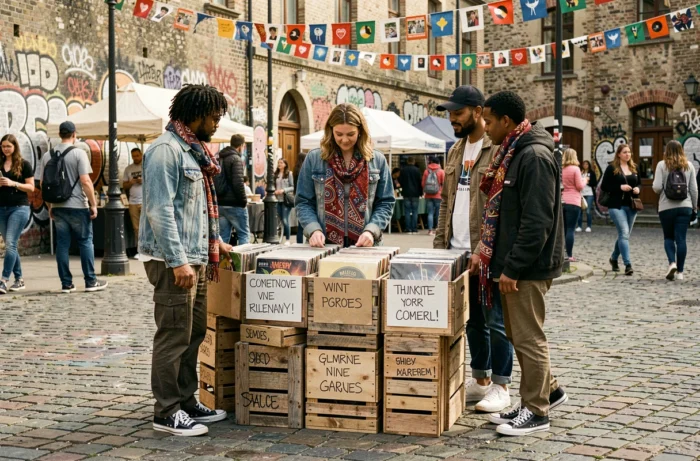
Cinema attendance in 2024 has returned to a level comparable to that before the health crisis. Cinema remains a massive cultural marker, a reference shared by a large part of the population.
On the heritage side, attendance has stabilized after the post-Covid recovery. The Ministry of Culture notes an increase in young audiences in museums, but also a strong concentration of visitors in the major establishments of Île-de-France. Provincial museums struggle more to capture this dynamic.
This double observation says something precise about current cultural trends: the public is returning to collective and physical practices. After years of accelerated digital consumption, the cinema and the museum retain their power of attraction. The question is no longer whether people go out, but where they go out and at what price.
The trap of geographical concentration
The stabilization of heritage attendance hides an asymmetry. Data from the Ministry of Culture’s Patrimostat 2026 report shows that major Parisian museums concentrate attention, while regional sites operate on very different logics: seasonal tourism, occasional events, loyal local audiences.
For a culture enthusiast looking to step off the beaten path, this data is a signal. The most publicized exhibitions are not always the most accessible or enriching. Regional heritage sites often offer a less saturated experience and are more conducive to discovery.
Art market in 2024: fragmentation and caution
The art market experienced a year of adjustment. Analyses based on the Art Basel and UBS report describe a phenomenon of fragmentation: entry-level sales are progressing in certain segments, while very high-end lots remain volatile.
In practical terms, this means that collectors are favoring more cautious and accessible purchases. The market is not collapsing; it is changing its morphology. Galleries offering works at reasonable entry prices are attracting a new clientele, often younger.
This trend is accompanied by a geographical shift. Art fairs are no longer solely dominated by Western venues. The report mentions a rise of markets like Japan, where Tokyo Gendai is attracting increasing attention. For contemporary art enthusiasts, these movements are redrawing the map of events to follow.
What this changes for enthusiasts
Three concrete consequences for anyone following the art market:
- Regional fairs and emerging galleries are becoming more relevant entry points than major auctions for discovering new artists
- Digital art, after the frenzy of previous years, is repositioning itself in a more measured framework, with prices reflecting artistic value rather than speculation
- Female artists continue to gain visibility, as confirmed by several Parisian fairs in 2024, with programs that grant them a structural and not merely symbolic place
Why successful culture escapes predictions
The common thread of 2024 is the gap between planned cultural offerings and what the public actually chooses. The Pass Culture was meant to diversify practices: it has reinforced reading. Museums were supposed to democratize: attendance remains concentrated in a few places. The art market was to continue its record chase: it has calmed down.
Sustainable cultural trends rarely emerge from institutional schemes. They arise from the repeated choices of millions of people who decide, each week, how to spend their cultural time and money. In 2024, these choices showed a preference for the concrete, the local, and the accessible.
Studies and barometers published by the Ministry of Culture confirm this reading. The data does not lie on one point: cultural policy works better when it supports existing practices than when it tries to redirect them.