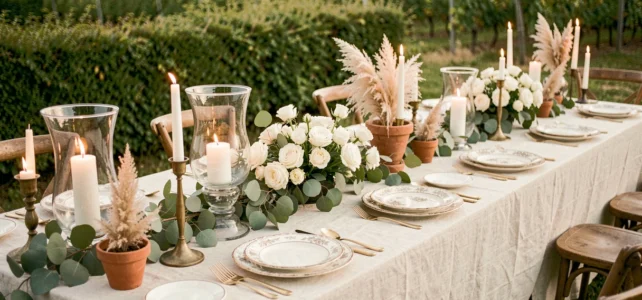
The wedding decoration market is undergoing a silent transformation. Couples preparing their reception in 2026 are balancing aesthetics, budget, and environmental impact, with more specific requirements than a few years ago. Decorative choices are no longer limited to a color palette and a theme: they involve questions about the sourcing of materials, reuse, and sometimes local regulations.
Sustainable wedding decoration: what the eco-responsible shift changes concretely
The most significant trend concerns the move towards reusable decor. Reception venues and service providers are now documenting the use of borrowed vases, floral structures assembled without synthetic floral foam, and rented rather than purchased furniture. The stated goal: reduce the waste generated by a single event.
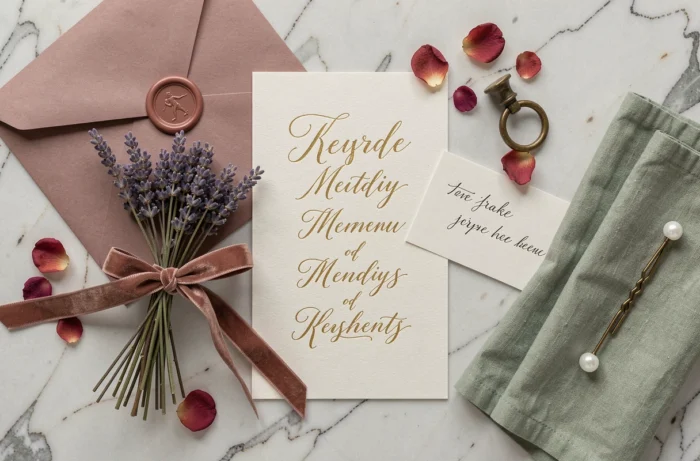
This logic goes beyond the simple choice of materials. It also affects how the seating plan, stationery, and ceremony elements are conceived. A seeded paper place card replaces printed cardboard. A fabric or wooden guest book can be kept, whereas a classic notebook often ends up forgotten in a box.
Couples looking to explore concrete options for each decorative item can rely on the decor on Mon Plus Beau Mariage, which categorizes ideas by theme and budget.
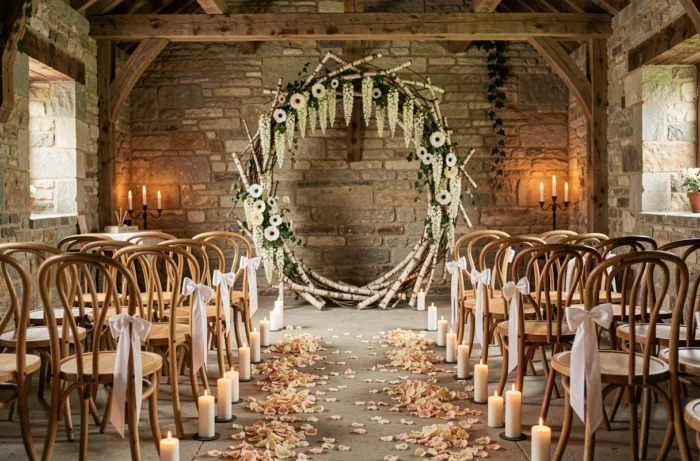
Local flowers and potted plants: rethinking table floral decoration
The floral budget often represents one of the heaviest expenses in wedding decoration. However, alternatives are multiplying and changing the game. Potted plants are gaining ground as an alternative to cut flowers, as they can be replanted or given to guests at the end of the evening.
Transparency about the origin of flowers is becoming a selection criterion for florists. Recent guides show that couples are increasingly requesting seasonal and locally sourced flowers, in response to long-distance imports. A bridal bouquet made of dahlias, garden roses, or grasses grown near the reception venue can sometimes cost less than an exotic arrangement, fitting into a rustic or bohemian coherence without forcing the theme.
Criteria for choosing a committed florist
- Ask for the exact origin of the proposed varieties and check if the florist works with identified local producers
- Favor arrangements without floral foam (oasis), replaced by mechanical supports made of wire or kenzan
- Negotiate the retrieval or donation of arrangements after the event, particularly to nursing homes or charities
Outdoor wedding lighting: solar garlands and low-consumption LED
Lighting transforms any space, but it poses technical constraints outdoors. Solar garlands and LED lighting are becoming essential for outdoor weddings for a practical reason: they eliminate the need for a generator, a source of noise and consumption.
A solar garland charged during the day works for several hours after sunset. LED models offer warm tones that rival candles, without the risk associated with an open flame. For a chic wedding in a garden or under a ceremony arch, the visual effect remains comparable to traditional lighting, with a much lighter installation.
Regulations on fireworks and festive fires
One point rarely anticipated by couples: during fire risk periods, certain French prefectures temporarily prohibit the use and transport of fireworks. Checking the current prefectural orders before planning Bengal fires or flying lanterns avoids an unpleasant surprise on the big day. This regulatory constraint pushes towards alternative lighting solutions, such as LED candles or light projections.
Colors and materials: combinations that stand the test of time
The choice of a color palette remains the starting point for any wedding decoration. Field feedback varies on this point: some wedding planners advocate for neutral palettes (white, linen, sage green) for their timelessness, while others note a marked return of vibrant colors, particularly terracotta, mustard yellow, or Klein blue.
The coherence between colors, materials, and the reception venue matters more than adhering to a trend. A rustic barn wedding calls for raw wood, linen, and muted tones. A wedding at a vineyard can support golden touches and more elaborate tablecloths without falling into excess.
- Test colors in natural light and artificial light before finalizing textiles (tablecloths, napkins, ribbons)
- Limit the palette to three main shades to avoid visual overload in photos
- Incorporate a raw material (wood, stone, wicker) to anchor the decoration in the venue rather than imposing a generic theme
Photo inspirations available on social networks often show highly produced setups. The reality of a wedding with one hundred guests imposes compromises: the decoration must remain readable on a large scale, not just in close-up on a screen. A strong decorative element per area (ceremony arch, table centerpieces, photobooth corner) creates more impact than an accumulation of small scattered details.
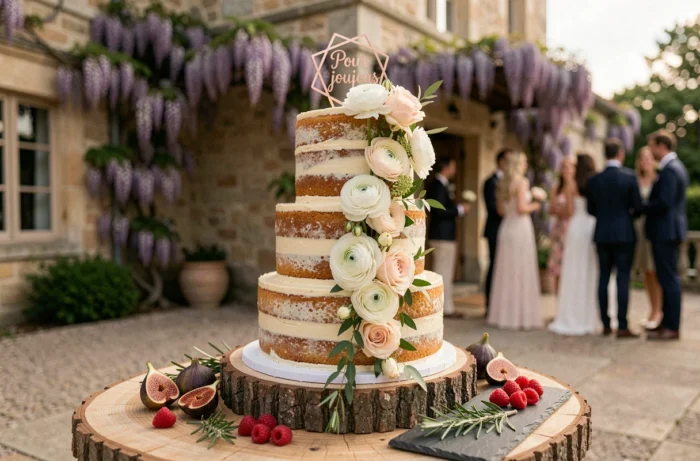
The decoration of a wedding is built on concrete trade-offs between aesthetics, logistics, and venue constraints. Couples who take the time to check the sourcing of their flowers, local regulations on festive lighting, and the sustainability of their decorative choices lay the groundwork for a reception that reflects them, without unpleasant surprises on the morning of the ceremony.